
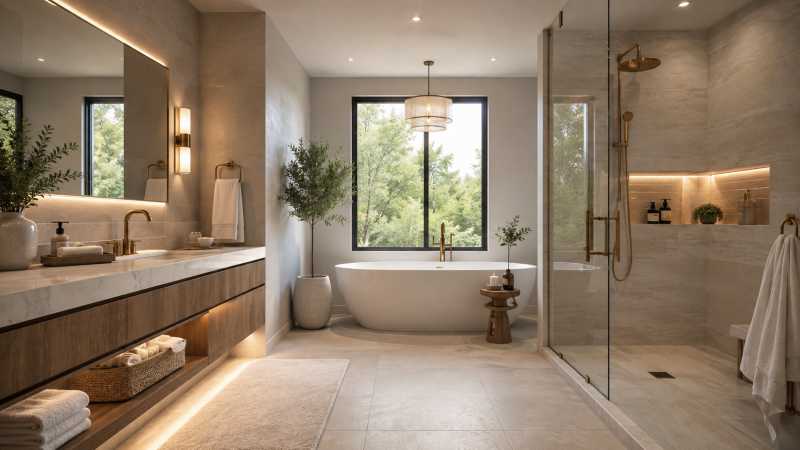
A bathroom can feel luxurious without becoming enormous, overly decorated, or extremely expensive. In fact, the most elegant bathrooms often rely on thoughtful design rather than excessive decoration. They combine quality materials, balanced lighting, comfortable fixtures, smart storage, and carefully selected details to create a relaxing environment.
The key lies in making every element work together. A beautiful stone surface will not feel luxurious if clutter covers the vanity. Likewise, expensive fixtures may look ordinary when harsh lighting exposes every corner. Therefore, successful bathroom design depends on balance, consistency, and attention to detail.
If you want to create a sophisticated bathroom, start by thinking beyond individual products. Consider the complete experience. The colors should complement the materials, the lighting should support the layout, and the storage should keep everyday items out of sight.
This guide explains What Makes a Bathroom Look Truly Luxurious. It covers everything from premium surfaces and statement fixtures to lighting, organization, textiles, accessories, and practical upgrades.
1. Start With a Clean and Balanced Layout
Before choosing finishes, examine the bathroom layout. Luxury begins with a space that feels organized and comfortable.
A crowded bathroom rarely feels high-end, even when it contains expensive products. Instead, aim for visual breathing room. Keep pathways clear and avoid placing unnecessary furniture or accessories around the room.
A well-planned layout should make everyday activities easy. Position the vanity where users can access it comfortably. Place storage close to the areas where you need it. If possible, separate wet and dry zones to improve both functionality and appearance.
For larger bathrooms, consider creating distinct areas for bathing, grooming, and storage. A freestanding tub can become a focal point, while a spacious walk-in shower can provide a resort-style experience.
Even a small bathroom can achieve this effect. Use wall-mounted fixtures, floating vanities, recessed storage, and large-format tiles to create a more open appearance.
2. Choose Premium-Looking Materials
Materials strongly influence how a bathroom feels. Fortunately, luxury does not always require the most expensive natural materials.
Natural stone remains a popular choice because it provides depth, texture, and timeless character. Marble can introduce dramatic veining, while quartz offers a consistent appearance and practical durability. Large-format porcelain tiles can also create an elegant stone-inspired finish.
Large tiles have another advantage. They reduce the number of visible grout lines, which makes walls and floors appear more seamless. This simple change can make the entire room look cleaner and more sophisticated.
When selecting materials, avoid using too many competing patterns. Instead, choose one primary surface and complement it with subtle secondary finishes.
For example, a marble-inspired wall can pair beautifully with plain flooring and understated cabinetry. This approach allows the main material to become the visual focus.
3. Create a Sophisticated Color Palette
Color plays an important role in creating an upscale atmosphere. Neutral shades often work particularly well because they create a calm and timeless foundation.
White, cream, beige, taupe, soft gray, and warm brown can all provide an elegant backdrop. However, luxury does not mean you must use only white.
Deep green, navy, charcoal, and muted earthy tones can add personality while maintaining sophistication. The key is to use darker colors strategically rather than covering every surface.
You can also create depth by combining different shades of the same color. For instance, warm beige walls can work with cream textiles, light wood cabinetry, and brushed brass hardware.
Additionally, consider how colors interact with natural and artificial light. A shade that looks warm during the day may appear different under cool LED bulbs. Always evaluate samples under the lighting conditions you plan to use.
4. Upgrade the Vanity
The vanity often becomes one of the most noticeable elements in a bathroom. Therefore, upgrading it can dramatically change the overall appearance.
Choose cabinetry with clean lines and quality construction. A floating vanity can create a modern appearance while making the floor seem more spacious.
For a classic style, consider a furniture-style vanity with elegant hardware. For contemporary spaces, handleless drawers and minimalist doors can produce a sleek effect.
The countertop also deserves attention. Quartz, natural stone, and high-quality porcelain surfaces can provide a refined finish.
Avoid covering the countertop with everyday products. Keep toothbrushes, bottles, cosmetics, and cleaning products organized inside drawers or cabinets.
A clear countertop instantly makes a bathroom look more intentional.
5. Install Statement Fixtures
Standard bathroom fixtures can make a room feel ordinary. Statement fixtures, on the other hand, can provide a strong focal point.
A freestanding soaking tub can transform a spacious bathroom into a relaxing retreat. Choose a simple sculptural shape instead of an overly decorative design.
Walk-in showers can also create a luxury hotel atmosphere. Pair a spacious shower area with a rainfall showerhead, handheld fixture, built-in bench, and recessed niche.
However, avoid adding features simply because they appear luxurious. Every fixture should serve a purpose.
A large rainfall showerhead may look impressive, but good water pressure and comfortable controls matter just as much. Likewise, a beautiful bathtub should remain practical enough for regular use.
6. Pay Attention to Hardware and Metal Finishes
Small hardware choices can significantly affect the appearance of a bathroom.
Cabinet handles, faucets, shower controls, towel bars, robe hooks, and mirrors should work together visually. Popular finishes include brushed gold, polished chrome, brushed nickel, and matte black.
You do not necessarily need to use one metal throughout the room. Mixing metals can work well when you repeat each finish intentionally.
For example, brushed brass can become the dominant finish while small black accents provide contrast. The important thing is consistency.
Avoid using too many finishes without a clear design plan. Three or four unrelated metals can quickly make the room appear busy rather than luxurious.
7. Use Layered Lighting
Lighting may be one of the most important factors in creating a sophisticated bathroom.
A single ceiling light rarely provides the atmosphere or functionality that a luxury bathroom needs. Instead, use several layers of illumination.
Start with general lighting that provides overall visibility. Then add task lighting around the vanity. Wall sconces placed beside or near the mirror can provide balanced illumination for grooming.
Finally, introduce accent lighting to create atmosphere. LED strips beneath a floating vanity, inside shelving, or around architectural features can add a soft glow.
Warm lighting often creates a more relaxing environment than extremely cool lighting. Install dimmers when possible so you can adjust brightness according to the time of day.
Smart lighting systems can take this idea further. You can create different settings for morning routines, evening relaxation, and nighttime use.
8. Maximize Natural Light
Natural light can make almost any bathroom feel larger and more inviting.
If your bathroom has a window, avoid blocking it unnecessarily. Use suitable window treatments that protect privacy while still allowing daylight into the room.
Frosted glass can provide privacy without completely eliminating natural light. Skylights can also work well in suitable properties.
Mirrors can amplify daylight by reflecting it around the room. Position them carefully to make the most of available sunlight.
However, privacy should always remain a priority. Choose solutions that balance openness with comfort.
9. Add a Large, Elegant Mirror
A mirror does more than support everyday grooming. It can become a major design feature.
Large mirrors generally create a stronger sense of space than small decorative mirrors. In compact bathrooms, a wide mirror can visually expand the wall.
For a contemporary design, consider a frameless mirror with integrated lighting. For a traditional bathroom, a framed mirror can introduce warmth and character.
You can also choose unusual shapes to create visual interest. Rounded, arched, and pill-shaped mirrors can soften bathrooms dominated by straight lines.
Make sure the mirror complements the vanity, lighting, and other finishes rather than competing with them.
10. Keep Storage Hidden and Organized
Clutter can destroy the luxurious feeling of an otherwise beautiful bathroom.
Therefore, smart storage plays a major role in upscale design. Use drawers, cabinets, recessed medicine cabinets, built-in niches, and vanity storage to hide everyday essentials.
A recessed shower niche provides a convenient location for shampoo and soap while keeping the shower area visually clean.
Custom cabinetry can make better use of awkward corners and unused wall space. Even if you cannot afford custom furniture, choose storage solutions that match the bathroom’s style.
Organize products into categories and remove unnecessary packaging when appropriate. The goal is to create a calm visual environment.
11. Invest in Quality Towels and Textiles
Luxury is not only about what you see. It is also about what you feel.
Soft, thick towels can make a major difference in the bathroom experience. Turkish and Egyptian cotton towels are popular choices because they provide a comfortable, premium feel.
Neutral colors such as white, cream, beige, and gray create a hotel-inspired appearance. You can also introduce subtle color through towels if your overall design remains balanced.
Add a comfortable bath mat with a refined texture. However, avoid excessive patterns that compete with the flooring.
Fold or hang towels neatly. Simple presentation can make inexpensive textiles appear more polished.
12. Add Sensory Details
A luxury bathroom should appeal to more than your eyes.
Scent can strongly influence how a space feels. Use a subtle diffuser, quality liquid soap, or lightly scented candle to introduce a pleasant fragrance.
Plants can also add life and softness. Choose varieties that tolerate the humidity and lighting conditions of your bathroom.
Natural materials such as wood accessories, stone trays, woven baskets, and ceramic containers can provide additional texture.
However, restraint matters. A few carefully selected accessories often create a better result than a countertop filled with decorative objects.
13. Use Large-Format Tiles for a Seamless Appearance
Large-format tiles can make walls and floors look more continuous. Because they create fewer grout lines, they often produce a cleaner and more contemporary appearance.
Consider using the same or complementary tile across multiple surfaces. Extending a material from the floor into the shower can create visual continuity.
For example, a stone-effect porcelain tile can cover the floor and shower walls. Then, a contrasting wall finish behind the vanity can create a focal point.
Always select tiles according to the environment. Bathroom floors require suitable slip resistance, while shower surfaces need practical maintenance characteristics.
14. Create a Spa-Like Shower
The shower can become the centerpiece of a luxury bathroom.
Start with enough space to move comfortably. Then consider adding a rainfall showerhead, handheld shower, built-in niche, bench, and multiple spray options where appropriate.
Frameless or minimally framed glass can help maintain an open appearance. Clear glass also allows decorative tilework to remain visible.
A linear drain can provide a modern finish while supporting a clean floor design.
Most importantly, focus on comfort. Proper water pressure, temperature control, ventilation, and drainage matter just as much as appearance.
15. Bring Warmth Into the Design
Bathrooms can sometimes feel cold because they contain hard surfaces such as tile, glass, metal, and stone.
Introduce warmer elements to create balance. Wood-look cabinetry, natural baskets, soft textiles, and warm lighting can prevent the room from feeling sterile.
If your budget allows, underfloor heating can provide additional comfort during colder months. Heated towel rails can also improve the everyday experience.
These features demonstrate an important principle: luxury should improve how a bathroom feels, not simply how it photographs.
16. Avoid Overdecorating
A common mistake involves adding too many luxury features at once.
A bathroom does not need marble everywhere, oversized chandeliers, multiple accent walls, and dozens of accessories to look expensive.
Instead, select a few standout features and let them receive attention.
For example, you might combine a statement bathtub, elegant wall tile, large mirror, and sophisticated lighting. Keep everything else simple.
This restrained approach creates visual harmony and prevents the space from feeling overwhelming.
17. Make Small Bathrooms Feel More Expensive
Small bathrooms can still achieve a premium appearance. Start by reducing visual clutter.
Use a floating vanity to expose more floor area. Choose a large mirror to reflect light. Select consistent flooring and wall finishes to reduce visual interruptions.
Glass shower panels can also make the room feel more open. Wall-mounted faucets and recessed storage can save valuable space.
Choose a limited color palette and avoid unnecessary decorative elements.
Most importantly, prioritize proportion. A small bathroom benefits from appropriately sized fixtures rather than oversized products that make movement difficult.
18. Plan Your Budget Carefully
You do not need to renovate everything at once. Prioritize upgrades that produce the greatest visual and practical impact.
If your budget is limited, start with lighting, hardware, mirrors, towels, paint, and organization. These changes can dramatically improve the appearance without requiring major construction.
With a larger budget, consider replacing the vanity, upgrading flooring, installing a walk-in shower, or adding premium stone surfaces.
Before purchasing anything, create a complete budget that includes materials, labor, delivery, installation, and unexpected expenses.
Set aside a contingency amount for problems that may appear during renovation.
19. Quick Luxury Upgrades Without a Full Renovation
You can create a more sophisticated bathroom without removing walls or replacing plumbing.
Start by replacing outdated cabinet hardware and faucets. Then upgrade the mirror and lighting.
Next, remove unnecessary countertop items and organize your storage. Add matching towels, a quality bath mat, and a few carefully selected accessories.
A fresh coat of paint can also transform the room. Choose a refined neutral or a sophisticated darker shade depending on the available light.
Finally, improve the scent and cleanliness of the space. A spotless bathroom with coordinated accessories can feel significantly more luxurious.
20. What Makes a Bathroom Feel Truly Expensive?
Ultimately, What Makes a Bathroom Look Truly Luxurious? The answer involves more than expensive materials.
A luxurious bathroom combines thoughtful proportions, premium-looking surfaces, comfortable fixtures, layered lighting, organized storage, quality textiles, and carefully controlled decoration.
The most successful designs create a feeling of calm. They remove visual clutter and replace it with intentional details.
Think about the bathrooms you enjoy in high-end hotels and spas. They often feel luxurious because every element has a purpose. Lighting creates atmosphere. Towels provide comfort. Storage keeps surfaces clean. Fixtures feel substantial. Materials complement one another.
You can recreate these principles at home without copying an entire hotel bathroom.
21. Common Mistakes to Avoid
Several mistakes can prevent a bathroom from looking sophisticated.
First, avoid poor lighting. Even expensive finishes can appear unattractive under harsh or insufficient illumination.
Second, do not mix too many colors and materials. Choose a cohesive palette instead.
Third, avoid visible clutter. Keep everyday products organized inside cabinets and drawers.
Fourth, do not select fixtures based only on appearance. Check quality, functionality, maintenance requirements, and installation needs.
Finally, avoid chasing short-lived trends. Choose timeless materials for major renovations and introduce current styles through accessories that you can replace easily.
Final Thoughts
Creating a luxurious bathroom does not require an unlimited budget. Instead, focus on thoughtful design, quality finishes, practical organization, and sensory comfort.
Begin with a clean layout and cohesive color palette. Then select attractive materials, upgrade the vanity, install statement fixtures, and introduce layered lighting. Afterward, improve storage and add soft textiles, natural elements, and subtle fragrances.
Most importantly, remember that luxury comes from the complete experience. A bathroom should look beautiful while remaining comfortable and easy to use.
When you carefully combine these elements, you can turn an ordinary bathroom into a calm, polished retreat that feels considerably more expensive than it actually cost.
In short, What Makes a Bathroom Look Truly Luxurious? It comes down to intentional choices. Premium materials help, but balanced lighting, clutter-free surfaces, thoughtful storage, comfortable fixtures, and carefully selected details ultimately create the luxurious atmosphere people notice and appreciate.
For more info visit Decoratedhome